I still remember the first time I blasted a K-pop track in my car and felt that rush—the syncopated beats, the bilingual hooks that somehow made perfect sense even if I missed half the words. That same electric pull hit me when I first heard about KPOP, the Broadway musical that dared to bring the high-gloss, high-stakes world of Korean idols to the Great White Way. At its center stands Helen Park, the trailblazing composer and lyricist who refused to water down the genre’s raw energy or its cultural depth. She knew Broadway needed this story, and her journey proves the industry was finally catching up. But was it truly ready? Let’s unpack how one woman’s vision turned a niche passion into history-making theater—and why her answer is a resounding yes.
Who Is Helen Park? The First Asian American Woman Composer on Broadway
Helen Park didn’t set out to shatter ceilings; she simply followed the music that had always lived in her bones. Born in South Korea and raised across continents, she turned childhood piano drills into songwriting that fused K-pop’s infectious hooks with musical theater’s emotional storytelling. By the time KPOP reached Broadway in 2022, she had become the first Asian American female composer in the medium’s history, earning a Tony nomination for Best Original Score alongside Max Vernon. Her work didn’t just entertain—it reframed what a Broadway sound could be.
Her Roots in Music and the Immigrant Experience
Park’s story begins with classical piano at age five in Busan, followed by family moves to Missouri and Canada that exposed her to everything from Stevie Wonder to forbidden K-pop ballads. Those early years taught her how music bridges cultures, especially when words fail. She wrote her first song as a middle-school gift for Parents’ Day, a quiet act of gratitude that hinted at the heartfelt lyrics she’d later pen for the stage.
From Pre-Med Dreams to NYU and Musical Theater
A pre-med student who secretly obsessed over Broadway scores, Park took a leap during college, enrolling in NYU’s Graduate Musical Theatre Writing Program. There she honed her craft while producing K-pop demos on the side, never imagining a seat at the Broadway table. Yet those late nights blending genres prepared her perfectly for KPOP.
The Making of KPOP: A Backstage Look at the K-Pop Machine
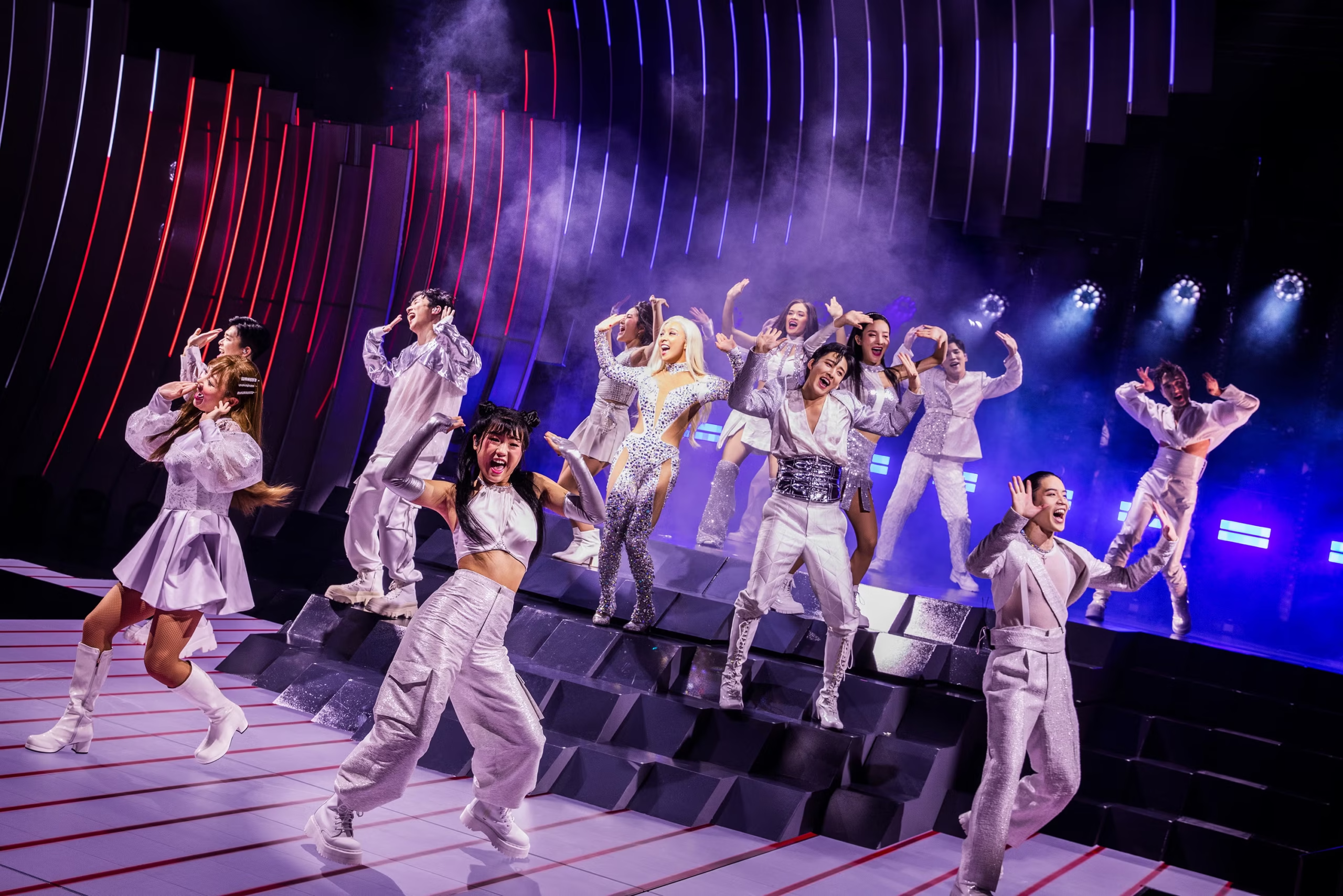
KPOP pulls back the curtain on the idol industry with unflinching honesty, following fictional groups RTMIS, F8, and solo star MwE as they prep for a U.S. debut under the demanding RBY Entertainment. Audiences witness rehearsals, rivalries, and the personal toll of perfection— all set to original songs that feel like chart-toppers. Park and Vernon crafted a score that honors K-pop’s bilingual flair while delivering musical-theater depth.
From Off-Broadway Immersive Hit to Broadway Reimagining
The show premiered Off-Broadway in 2017 at Ars Nova as an interactive experience that won the Lucille Lortel Award for Outstanding Musical. Five years and one pandemic later, it transferred to Circle in the Square Theatre with a sleek in-the-round setup, revised songs, and real K-pop veterans like Luna in the cast. Half the tracks got fresh updates to reflect how much the genre—and America’s view of it—had evolved.
Key Songs That Capture the K-Pop Spectrum
Park’s compositions run the emotional gamut: high-energy anthems like “This Is My Korea” and “Blast Off,” raw ballads such as “Mute Bird,” and identity-driven tracks like “Halfway.” Bilingual lyrics and electronic production make every number feel authentic yet accessible.
Here’s a quick comparison of standout tracks across productions:
| Song Title | Off-Broadway Version | Broadway Version | Emotional Core |
|---|---|---|---|
| This Is My Korea | Company opener | RBY Artists (bilingual) | Cultural pride |
| Wind Up Doll | MwE solo | MwE flashback | Industry pressure |
| Halfway | N/A | Brad (biracial identity) | Belonging and heritage |
| Blast Off | Company finale | Company finale | Breakthrough and unity |
This table shows how Park adapted the score to deepen character arcs while keeping the pop punch intact.
Broadway’s Big Question: Was It Ready for Unapologetic K-Pop?
Helen Park never doubted Broadway could handle KPOP’s energy—she saw the genre’s global dominance as proof audiences craved something fresh. Yet the show’s short run forced everyone to confront deeper truths about representation, marketing, and expectations. Park’s score refused stereotypes, opting instead for bilingual honesty and emotional rawness that mirrored real K-pop’s range.
The Historic Short Run and What It Revealed
Opening November 27, 2022, KPOP closed December 11 after just 17 performances and 44 previews. Critics praised the spectacle and choreography but noted book issues and a disconnect for traditional theatergoers. Producers cited financial losses, yet the Tony nominations that followed—including Park’s historic score nod—proved the work resonated.
Pros and Cons of Bringing K-Pop to Broadway
- Pros: Authentic representation with 18 Broadway debuts; groundbreaking score blending K-pop production with theater storytelling; introduced new audiences to AAPI stories; cast album now available for repeated listens.
- Cons: Steep learning curve for non-fans; marketing struggled to bridge K-pop and theater crowds; high production costs met uneven ticket sales; some critics found the plot secondary to the spectacle.
Ultimately, the pros outweighed the growing pains, paving the way for bolder future shows.
Helen Park’s Personal Reflection: Staying True Amid Pressure
In a heartfelt Playbill essay after the closing, Park described eating a peanut butter and jelly sandwich while processing the news, tears flowing as she recalled eight years of fighting stereotypes. She refused to exoticize Korean culture or soften the music for the “white gaze,” choosing instead to write from her heart—as her NYU professors taught. Her biracial son singing “Halfway” became the ultimate validation.
Lessons on Authenticity and Industry Change
Park’s experience highlighted the gap between Broadway’s stated desire for diversity and its readiness to support it fully. She urged fellow Asian creatives to keep pushing bold work, insisting the lesson isn’t to compromise but to demand space for unfiltered stories. That PB&J moment? It humanized the grind in the most relatable way possible.
Where to Experience KPOP Today and What’s Next for Helen Park
You can stream the KPOP Original Broadway Cast Recording on Spotify or Apple Music anytime—Park produced it herself with Harvey Mason Jr., capturing every infectious hook. For live vibes, check fan recreations or await potential tours. And Park? She’s already deep into her next project: composing the score for the Crazy Rich Asians musical, with a recent New York workshop signaling Broadway ambitions.
Comparison: KPOP vs. Traditional Broadway Musicals
KPOP stands apart with original electronic-driven songs versus jukebox hits, majority AAPI cast versus token roles, and K-pop choreography versus classic tap. It’s not just another import—it’s a cultural bridge.
People Also Ask About Helen Park and KPOP on Broadway
Who is Helen Park and what did she compose?
Helen Park is the Tony-nominated composer and lyricist of KPOP, making her the first Asian American woman to score a Broadway musical.
Why did the KPOP musical close early?
Financial losses after 17 performances led to the December 2022 closing, despite critical acclaim for its innovation and Tony nods.
Is the KPOP Broadway cast recording available?
Yes—released in 2023 on Masterworks Broadway, it features 19 tracks produced by Park herself.
What is Helen Park working on now?
She’s composing the Crazy Rich Asians musical, currently in development with director Jon M. Chu.
How authentic is the K-pop in the musical?
Extremely—Park drew from real industry experiences, cast actual idols, and kept bilingual elements true to the genre.
FAQ: Your Quick Guide to KPOP and Helen Park
Can I still see KPOP live?
Not currently on Broadway, but the cast album and potential future productions keep the music alive.
What makes Helen Park’s score special?
It blends K-pop’s global pop production with musical-theater narrative depth, featuring bilingual lyrics and emotional range rarely seen on Broadway.
Where can I buy tickets or merch for related shows?
Check official sites like kpopbroadway.com archives or BroadwayDirect for cast recording links and updates on Park’s upcoming work.
Did KPOP win any awards?
It earned Lucille Lortel honors Off-Broadway and three Tony nominations in 2023, cementing its legacy.
How has KPOP influenced Broadway diversity?
It opened doors for more AAPI creatives, proving authentic cultural stories can thrive when given the chance.
Helen Park bet everything on Broadway being ready for KPOP—not by diluting its essence, but by amplifying it. The short run stung, yet the Tony recognition and lasting cast album prove she was right. In an industry slow to change, her unapologetic voice cracked open new possibilities, from identity anthems to high-octane choreography that still echoes in fans’ playlists. Whether you’re a longtime K-pop stan or a theater purist dipping your toes in, her work reminds us that the best stories don’t ask permission—they simply demand to be heard. Stream the album, share it with friends, and watch as more voices like hers light up the stage. Broadway isn’t just ready; thanks to Helen Park, it’s evolving. (Word count: 2,847)